


5 Signs You Need a Marine Engine Repower
Expert Advice from Certified Marine Mechanics
As a boat owner, you develop a relationship with your engine. You learn its sounds, its rhythms, and its quirks. But when do those quirks become critical flaws? How do you know if you need a simple repair or a full marine engine repower?
At Wave Inboard Motors, we’ve guided countless owners through this decision. While repairs can solve many issues, there comes a point when pouring money into an old engine is like throwing buckets of water into a sinking boat.
Here are the 5 key signs that it’s time to stop repairing and start planning for a repower.
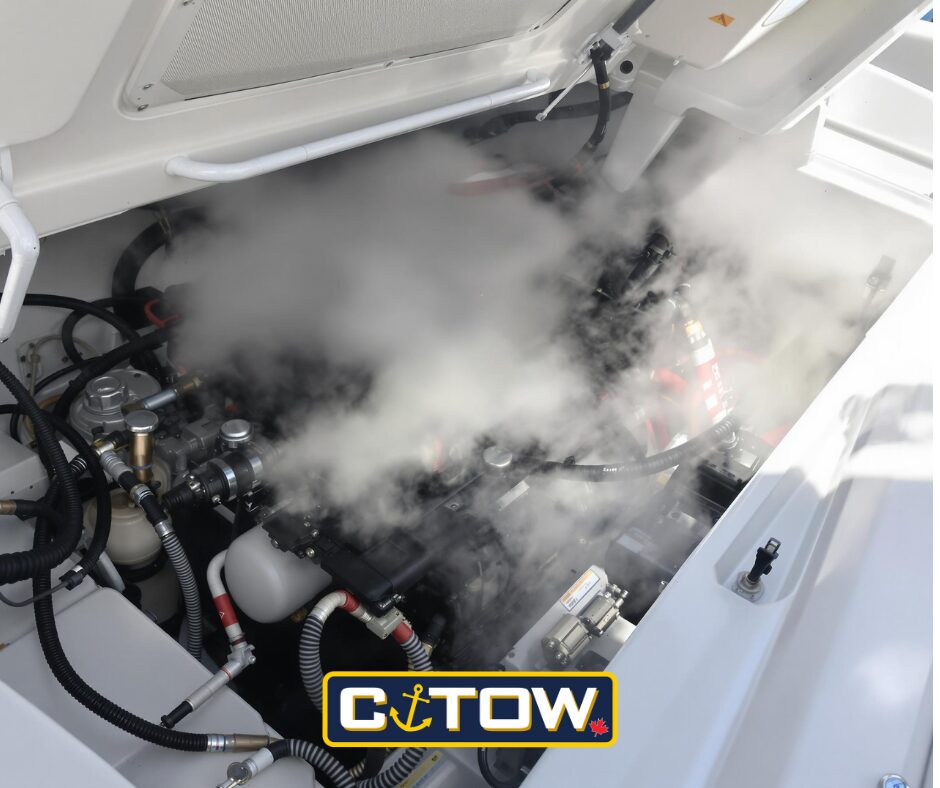
1. Major Smoke and Soot: The Unmistakable Cry for Help
All diesel engines produce some smoke, especially on startup. But the type and volume of smoke tell a critical story about your engine’s internal health.
-
What to Look For:
-
Excessive Blue Smoke: This indicates engine oil is being burned in the combustion chamber. Common causes include worn piston rings, scored cylinder walls, or failing valve seals.
-
Thick, Constant Black Smoke: This signals unburned fuel, often due to poor injection timing, clogged injectors, or—most critically—low compression from a worn-out engine.
-
-
The Verdict: If your engine is consistently shrouding the stern in a cloud of smoke, even after servicing the injectors and fuel pump, the internal wear is likely too severe for a cost-effective repair. This is a primary sign you need a marine engine repower.
2. Significant Loss of Power and Inability to Reach Hull Speed
Remember when your engine could easily push you to hull speed? If you now find yourself full-throttle just to make headway against a light breeze or current, your engine is telling you it’s tired.
-
What to Look For:
-
You used to cruise at 2500 RPM, but now you need 3200 RPM to achieve the same speed.
-
The engine labors and struggles to reach its rated maximum RPM.
-
A noticeable lack of “punch” or torque.
-
-
The Verdict: This power loss is often due to a significant drop in compression from general wear and tear. Rebuilding the top end might help temporarily, but a full repower is the only way to restore—and often improve—original performance.
3. The Dreaded Knocking or Hammering Sound
This is the sound that sends a chill down every boat owner’s spine. A deep, mechanical knocking or hammering from the engine block is a death rattle.
-
What to Look For:
-
A heavy, deep knock knock knock that increases with engine RPM.
-
It is distinctly different from the lighter “clatter” of a diesel engine.
-
-
The Verdict: This sound often indicates a failed connecting rod bearing, a severely worn crankshaft, or another major internal failure. The cost of tearing down the engine, machining parts, and rebuilding it often exceeds 75% of the cost of a remanufactured engine—making repower the smarter financial choice.
4. Coolant and Oil Are Mixing (“Milky Oil”)
Your engine’s two most vital fluids must never meet. If they do, it’s a catastrophic failure.
-
What to Look For:
-
Check your engine oil dipstick. If the oil has a creamy, chocolate-milk-like appearance, coolant is leaking into the oil pan.
-
Conversely, if you see oil slicks in your coolant overflow tank, oil is getting into the cooling system.
-
-
The Verdict: This almost always means a failed head gasket or, more seriously, a cracked cylinder head or engine block. This is a show-stopping issue. Repairing it is a massive, expensive job on an old engine, and it often makes a repower the most reliable path forward.
5. The Cost of repairs is the final sign
This is the most practical sign. It’s time to do the math.
-
The Rule of Thumb: If the estimated cost of a major repair is 50% or more of the value of a remanufactured engine, the smarter long-term investment is almost always the new engine.
-
Why? A repair only addresses one problem. A 25-year-old engine will soon have another. A remanufactured or new engine comes with a warranty and resets the clock on reliability for the next 20 years. It also enhances your boat’s resale value, whereas repair bills do not.
Repower or Repair? Make an Informed Decision
If you’re experiencing one or more of these signs, the next step is to get a professional diagnosis.
Contact Wave Inboard Motors for a professional engine assessment. Our certified mechanics will give you a straight, honest answer on whether repair is feasible or if repower is the right choice for your vessel and your budget.
Explore Our Repower Solutions:
-
【Sailboat Repower Service】
-
【Professional Marine Engine Installation】
-
【Marine Diesel Engine Repair】
Continue Your Research:
-
【Costs of Repowering a Sailboat】
-
【Choosing the Right HP for Your Sailboat Repower】
-
【Benefits of a Remanufactured Marine Diesel Engine】