



The Ultimate Trawler Repowering Guide: Maximize Performance and Value
Navigate the critical decisions of replacing your engine with confidence, from assessing your needs to final installation.
Introduction
The heart of any trawler is its engine—a steady, reliable pulse that promises safe passage. But when that heart begins to falter, the decision to repower is one of the most significant investments and improvements a trawler owner can make. At Wave Inboard Motors, we’ve guided countless owners of Grand Banks, Nordic Tugs, and Kadey-Krogens through this process. Our hands-on experience has taught us that a successful trawler repower is about more than just swapping metal; it’s a strategic project that enhances safety, efficiency, and resale value.
This guide will walk you through the entire journey, from recognizing the first signs of trouble to enjoying the quiet hum of your new powerplant. We’ll help you understand your options, whether you’re considering a modern electronic diesel or rebuilding a legendary workhorse like the Vetus Deutz DT4.70. Making an informed choice requires a clear understanding of your boat’s needs and your cruising goals.
Part 1: Is It Time to Repower? 5 Tell-Tale Signs
Recognizing the right time for a trawler engine replacement can save you from costly breakdowns and lost cruising seasons.
-
Chronic, Costly Repairs: If you’re facing a major failure like a cracked block, spun bearings, or a worn-out crankshaft, the repair costs can quickly approach the price of a new engine. Continually fixing oil leaks, overheating issues, and failing components is a financial drain.
-
Significant Loss of Power & Excessive Smoke: An engine that struggles to reach its rated RPM and billows blue or black smoke is often suffering from worn piston rings, cylinder liners, or injectors. This indicates overall engine fatigue.
-
Persistent Coolant or Oil Contamination: Coolant in your oil (a milky substance) or oil in your coolant signifies failed head gaskets or worse, a cracked head or block—a death sentence for most marine engines.
-
Parts Are No Longer Available: For older engines, finding replacement parts can become a months-long scavenger hunt. A <a href=”/marine-engine-survey” title=”Marine Engine Survey”>professional marine engine survey</a> can confirm the long-term viability of keeping an old engine running.
-
The Desire for Modern Performance & Comfort: Even if your old engine runs, modern diesels offer compelling advantages: drastically reduced noise and vibration, better fuel efficiency, and lighter weight, all of which enhance your quality of life on the water.
Part 2: Choosing Your New Engine: Legacy vs. Modern
This is the core decision. Do you stay with a known, rugged legacy engine or upgrade to a modern design?
The Legacy Workhorse: Vetus Deutz DT4.70
The <a href=”/vetus-deutz-dt4-70″ title=”Vetus Deutz DT4.70″>Vetus Deutz DT4.70</a> is a prime example of a heavy-duty legacy engine. Its air-cooled design is its greatest strength, eliminating all risk of seawater cooling system corrosion.
-
Best For: Owners of classic, heavy-displacement trawlers who value ultimate mechanical simplicity and corrosion resistance above all else.
-
Considerations: These engines are louder, heavier, and no longer in production. A high-quality rebuilt unit is often the best option.
The Modern Equivalent: Yanmar, Beta Marine, etc.
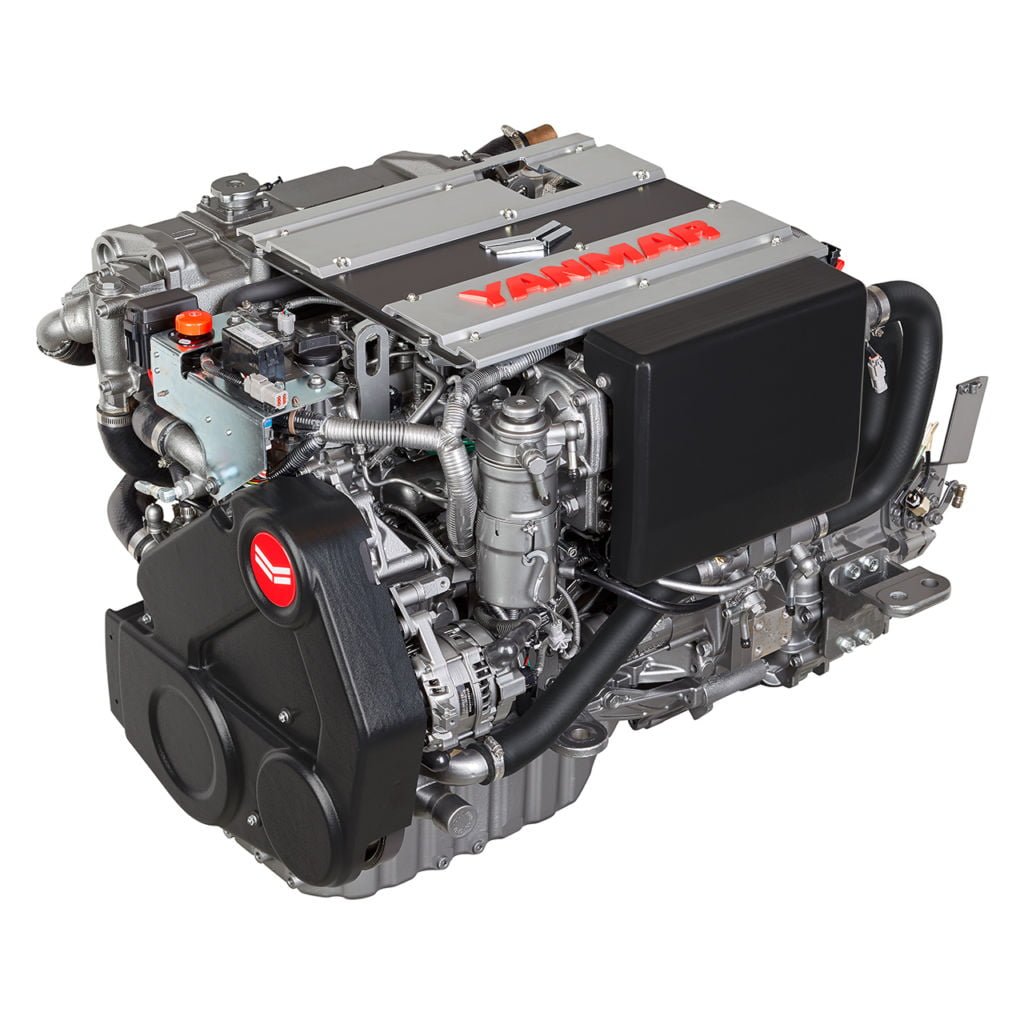
Modern engines from Yanmar, Beta Marine, and others are based on industrial diesel blocks (like Kubota) but are marinized for today’s boating needs.
-
Best For: The vast majority of owners seeking a quieter, smoother, more fuel-efficient operation with a full factory warranty.
-
Key Advantages:
-
Freshwater Cooling: Extends engine life by using a heat exchanger, preventing corrosive seawater from flowing through the engine block.
-
Lower Noise & Vibration: Advanced engineering and multi-cylinder designs make for a much more pleasant onboard experience.
-
Better Power-to-Weight Ratio: You often get more horsepower from a lighter, more compact package.
-
Excellent Parts & Service Support: A global dealer network means help is never far away.
-
Our Expert Take: While we have a deep respect for legacy engines, we typically recommend a modern diesel for most trawler repower projects. The benefits in comfort, reliability, and warranty coverage overwhelmingly justify the investment for cruisers and liveaboards.
Part 3: The Repower Process: What to Expect
A professional <a href=”/marine-engine-installation” title=”Marine Engine Installation”>marine engine installation</a> is a meticulous process. Here’s a simplified overview:
-
Comprehensive Assessment & Planning: This involves a detailed <a href=”/marine-engine-survey” title=”Marine Engine Survey”>marine engine survey</a> to measure the engine bed, evaluate the <a href=”/drivetrain-stern-gear” title=”Drivetrain and Stern Gear”>stern gear</a> (shaft, strut, propeller), and plan the project.
-
Engine & Systems Removal: The old engine, along with its wiring, controls, and exhaust system, is carefully removed.
-
Preparation & Modifications: The engine room is cleaned and prepped. Engine beds are often modified or rebuilt to fit the new engine’s footprint.
-
The Installation: The new engine is lifted into place. This is a critical step that requires precision.
-
Reconnection & Alignment: All new wiring, hoses, and control cables are run. The most crucial step is the <a href=”/propulsion-system-alignment” title=”Propulsion System Alignment”>marine propulsion system alignment</a>, where the engine is perfectly aligned with the propeller shaft to prevent vibration and damage.
-
Sea Trial & Commissioning: The final step is testing the engine under load to ensure everything performs as specified.
Frequently Asked Questions (FAQ)
Q1: How much does a typical trawler repower cost?
A: Costs vary widely based on the boat size and engine chosen, but for a 34-42 foot trawler, you should budget for a total project cost between $25,000 and $50,000+. This includes the new engine, all ancillary components (prop, shaft, exhaust), and professional labor. Getting a detailed quote is essential.
Q2: Can I reuse my existing propeller and shaft?
A: Often, no. A new engine will likely have a different RPM, horsepower, and rotation. Your <a href=”/drivetrain-stern-gear” title=”Drivetrain and Stern Gear”>marine drivetrain and stern gear specialist</a> will need to calculate the correct propeller size and pitch to match the new engine’s power band for optimal performance.
Q3: How long does the entire repower process take?
A: From initial decision to sea trial, a standard repower can take anywhere from 4 to 12 weeks. Factors include engine availability, the extent of custom fabrication needed, and yard scheduling. Planning during the off-season is highly recommended.
Q4: Will a new engine increase my boat’s value?
A: Absolutely. A recent, professional repower with a modern, reliable diesel engine is one of the most significant value-adds you can make to an older trawler. It gives potential buyers immense confidence and often returns a high percentage of the investment at sale time.
Conclusion: An Investment in Adventures to Come
A trawler repower is a significant undertaking, but viewed as an investment in countless future days on the water, it is one of the most rewarding projects a boat owner can complete. By understanding the signs, carefully weighing your engine options, and partnering with an experienced team for the <a href=”/marine-engine-installation” title=”Marine Engine Installation”>installation and alignment</a>, you can transform your trawler’s performance and reliability for the next decade and beyond.
Ready to discuss your project? Contact Wave Inboard Motors for a professional consultation and quote.