

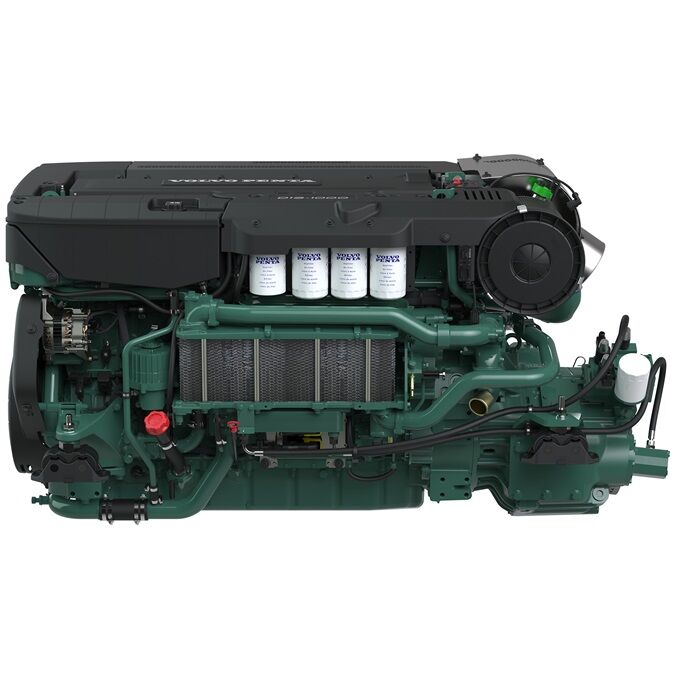

Volvo Penta D13-1000: The 1000hp Benchmark for Heavy-Duty Performance
Industrial-grade power meets advanced electronics for unparalleled reliability in the most demanding applications.
Introduction
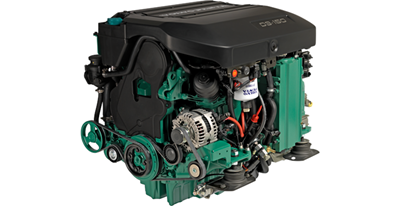
When mission-critical performance and unwavering reliability are non-negotiable, the Volvo Penta D13-1000 1000hp marine diesel engine stands as a titan in its class. This engine leverages Volvo Penta’s global experience in heavy-duty trucking and industrial power, refined for the harsh marine environment. At Wave Inboard Motors, our expertise with the D13 series comes from integrating these powerhouses into high-end superyachts and hard-working commercial vessels through our Marine Engine Installation Services, where their brute-force torque and sophisticated management systems consistently deliver.
The D13-1000 is engineered for the most demanding applications, serving as the prime power source for large superyachts, fast ferries, patrol vessels, and heavy-duty workboats from 70 to 120 feet. Its state-of-the-art common rail fuel injection and twin-stage turbocharging deliver immense low-end torque, exceptional fuel economy across a broad power band, and compliance with the latest IMO Tier III emissions standards. This makes it a premier marine diesel repower candidate for vessels requiring a massive leap in power and efficiency.
For owners and builders considering an upgrade to this class of power, the D13-1000 represents the pinnacle of modern marine engineering. As part of our comprehensive Marine Engine Repowering Solutions, we manage the complex integration of these engines, ensuring they are perfectly matched to the vessel’s hull and operational profile. To understand the full scope of such an investment, we recommend our guide Calculating the True Cost of a Marine Repower.
Technical Specifications Table
| Specification | Detail |
|---|---|
| Model | Volvo Penta D13-1000 |
| Engine Type | 6-Cylinder, 4-Stroke, Inline, Twin-Turbocharged & Aftercooled, Common Rail Diesel |
| Displacement | 12.8 L |
| Max Output | 1000 HP (736 kW) @ 1800-1900 RPM |
| Peak Torque | 3471 lb-ft (4700 Nm) @ 1300 RPM |
| Bore x Stroke | 131 mm x 158 mm |
| Compression Ratio | 17.5:1 |
| Cooling System | Freshwater Heat Exchanger |
| Starting System | 24V Electric Start |
| Alternator Output | 24V, 2 x 150A (Standard) |
| Dry Weight | Approx. 3858 lbs (1750 kg) |
| Dimensions (LxWxH) | Approx. 90″ x 45″ x 55″ (2286mm x 1143mm x 1397mm) |
| Emissions Compliance | IMO Tier III, EPA Tier 3 |
Competitor Comparison Table
| Feature | Volvo Penta D13-1000 | CAT C18 1150 | MTU 10V2000M96 |
|---|---|---|---|
| Engine Type | Inline-6, Twin-Turbo, Common Rail | V8, Twin-Turbo, Common Rail | V10, Quad-Turbo, Common Rail |
| Power & Torque | 1000hp, Massive Torque | 1150hp, High Torque | 1432hp, Highest Torque |
| Weight | 3858 lbs | 4840 lbs | 5512 lbs |
| Packaging | Excellent (Inline-6) | Good (V-Configuration) | Less Compact (V-10) |
| Key Differentiator | Optimal Power-to-Weight, IMO Tier III | CAT Durability & Support | Maximum Power Density |
Verdict: The Volvo Penta D13-1000’s compelling advantage is its optimal balance of massive power, a manageable footprint, and a lighter weight than many competitors. While the CAT C18 offers more peak horsepower and the MTU 10V2000 is in a higher power class, the D13-1000 delivers exceptional performance in a more service-friendly inline-6 configuration, making it an ideal choice for a wide range of large vessel applications. For a detailed analysis, our article Volvo Penta vs. CAT vs. MTU: Choosing a Heavy-Duty Marine Diesel provides a comprehensive comparison.
Replacement Options Table
| Option | Major Overhaul of Older Engine | Repower with Volvo Penta D13-1000 | Repower with Larger V-Configuration Engine |
|---|---|---|---|
| Condition | “Zero-Hour” but Outdated | Brand New, State-of-the-Art | Brand New, Higher Power |
| Warranty | Limited (on workmanship) | Full Volvo Penta Factory Warranty | Full Manufacturer Warranty |
| Performance | Restored to Original | Transformative Power & Efficiency | Highest Performance |
| Emissions | Non-Compliant | IMO Tier III Compliant | Varies |
| Project Value | Minimal Increase | Significant Value Increase | Maximum Value Increase |
Expert Recommendation: For large vessels requiring a substantial power upgrade with modern efficiency and emissions compliance, the Volvo Penta D13-1000 is an outstanding investment. Its inline-6 design often simplifies service access compared to bulkier V-configurations. Before proceeding, a Marine Engine Diagnostic Service and a full structural assessment are crucial to ensure your vessel’s hull, fuel systems, and stern gear are prepared for this level of power.
Pros and Cons Table
| Pros | Cons |
|---|---|
| Massive Low-RPM Torque for Heavy Loads | Premium Purchase Price |
| IMO Tier III Emissions Compliance | Complex twin-turbo system requires expert care |
| Excellent Power-to-Weight Ratio | Significant physical size requires ample engine room space |
| Superior Fuel Efficiency for its Class | Requires meticulous Scheduled Marine Diesel Maintenance |
| Global Volvo Penta Support Network |
Frequently Asked Questions (FAQ)
Q1: What is the primary application for the D13-1000?
A: This engine is ideally suited for large motor yachts, fast commercial ferries, patrol boats, and heavy-duty fishing vessels where a combination of high speed, strong load-carrying capability, and long-range efficiency is required.
Q2: How does the D13-1000 achieve IMO Tier III compliance?
A: It utilizes Volvo Penta’s advanced combustion technology, twin-stage turbocharging, and often an integrated Selective Catalytic Reduction (SCR) system to significantly reduce Nitrogen Oxide (NOx) emissions.
Q3: Can the D13-1000 be paired with pod drives?
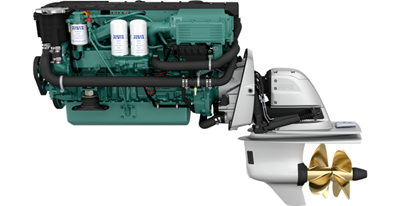
A: Yes, the D13-1000 is the base engine for the 【Volvo Penta IPS1350】 system, which pairs twin D13-675hp engines with IPS pods. For a single engine application with a pod, specific configurations would need to be evaluated.
Q4: What is the most important maintenance consideration for the D13-1000?
A: Absolute fuel purity and adherence to strict service intervals. The high-pressure common rail system and turbochargers are precision components. Contaminants or neglected maintenance can lead to catastrophic failures. A professional Scheduled Marine Diesel Maintenance program is essential.
Q5: How does the D13-1000 compare to the D13-800?
A: Both share the same robust 12.8-liter block. The D13-1000 produces more power and torque through different turbocharging, engine tuning, and potentially aftertreatment systems to meet a higher power rating and stricter emissions standards.











Reviews
There are no reviews yet.