




Volvo Penta IPS1200: The 1200hp Benchmark in Pod Drive Performance
Unrivaled efficiency, whisper-quiet operation, and joystick precision for large motoryachts.
Introduction
For yacht owners and builders who demand a perfect synthesis of performance, efficiency, and onboard comfort, the Volvo Penta IPS1200 1200hp pod drive system stands as a premier choice. This integrated propulsion system represents the culmination of Volvo Penta’s pod drive technology, offering substantial power with the game-changing benefits of forward-facing propulsion. At Wave Inboard Motors, our expertise with this system through complex Marine Engine Repowering Solutions allows us to authoritatively guide owners through the significant advantages it offers for large motoryacht performance.
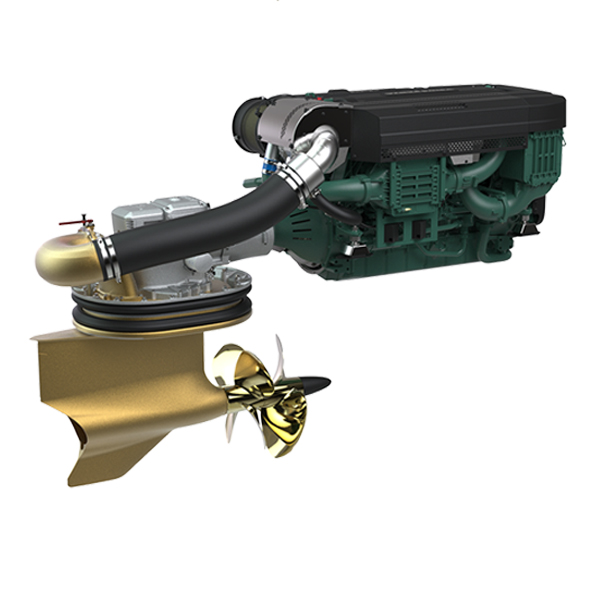
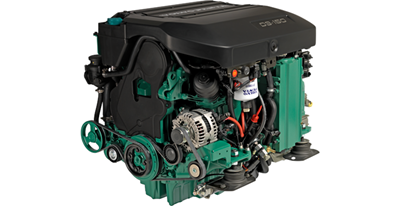
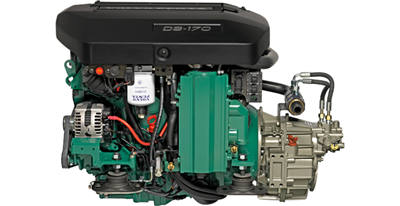
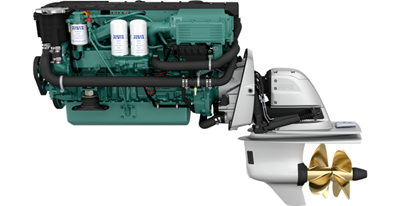
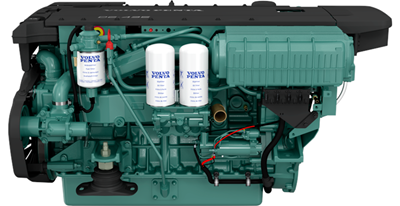
The IPS1200 is engineered for large motoryachts and performance cruisers in the 55 to 85-foot range. Its twin 6-cylinder D13 engines, each producing 600hp, are paired with efficient IPS pod drives that pull the vessel through the water. This configuration delivers up to 30% better fuel efficiency compared to traditional shaft lines, significantly extended range, and a radical reduction in noise and vibration. This system is the definitive choice for owners seeking a marine diesel repower that elevates every aspect of their yachting experience.
Understanding the sophisticated integration and benefits of pod drives is key. As detailed in our guide Benefits of Volvo Penta IPS Pod Drives, the advantages are transformative. To accurately assess the project scope, we recommend our resource Calculating the True Cost of a Marine Repower.
Technical Specifications Table
| Specification | Detail |
|---|---|
| Model | Volvo Penta IPS1200 |
| System Configuration | Twin Volvo Penta D13-600 engines with IPS3 pod drives |
| Total Max Output | 1200 HP (883 kW) |
| Engine Type (Each) | 6-Cylinder, 4-Stroke, Turbocharged & Aftercooled, Common Rail Diesel |
| Displacement (Each) | 12.8 L |
| Peak Torque (Each) | 1737 lb-ft (2357 Nm) @ 1300 RPM |
| Cooling System | Freshwater Heat Exchanger |
| Starting System | 24V Electric Start |
| Dry Weight (Total System) | Approx. 10,362 lbs (4700 kg) |
| Propulsion Type | Volvo Penta IPS3 Pod Drives (Forward-Facing Propellers) |
Competitor Comparison Table
| Feature | Volvo Penta IPS1200 | Traditional Shaft Drives (Twin 650hp) | Competitor Pod Systems |
|---|---|---|---|
| Propulsion Method | Pulling (IPS Pods) | Pushing (Traditional Shafts) | Varies |
| Total Power | 1200hp | ~1300hp | Similar |
| Fuel Efficiency | Up to 30% Better | Baseline | 10-20% Better |
| Noise & Vibration | Dramatically Reduced | High | Reduced |
| Maneuverability | Joystick Precision, Dynamic Positioning | Standard | Good |
| Onboard Space | Significantly More | Standard | More |
Verdict: The Volvo Penta IPS1200 offers a complete system advantage. While traditional shaft drives are mechanically simple, the IPS1200 provides a holistic upgrade that transforms the yacht’s performance, economy, and ambiance. The combination of the robust D13 block with the highly efficient IPS3 pod makes this a top-tier system for modern motoryacht applications.
Replacement Options Table
| Option | Overhaul Traditional System | Repower with IPS1200 | Repower with New Shaft Drives |
|---|---|---|---|
| Condition | “Zero-Hour” but Outdated | State-of-the-Art Technology | Modern, Conventional |
| Warranty | Limited (on workmanship) | Full Volvo Penta Factory Warranty | Full Manufacturer Warranty |
| Performance | Restored to Original | Transformative Efficiency & Comfort | Improved |
| Vessel Value | Minimal Increase | Massive Increase & Desirability | Significant Increase |
| Total Cost of Ownership | Lower Initial, High Operational | Higher Initial, Lower Operational | Moderate |
Expert Recommendation: For a vessel capable of accommodating the IPS1200 system, the investment is in a fundamentally superior yachting experience. The Volvo Penta IPS1200 delivers such dramatic improvements in fuel economy, quietness, and maneuverability that it represents a strong long-term value proposition. The resulting increase in resale value and marketability is substantial. A Marine Engine Diagnostic Service and hull compatibility assessment are critical first steps for any repower project of this magnitude.
Pros and Cons Table
| Pros | Cons |
|---|---|
| Revolutionary Fuel Efficiency (Up to 30% savings) | High Initial Investment |
| Unparalleled Onboard Quietness & Comfort | Requires Specialist Installation & 【Scheduled Marine Diesel Maintenance】 |
| Joystick Maneuvering & Dynamic Positioning | Complex System Integration |
| Increased Interior Space (No engine boxes, shafts) | |
| Faster Acceleration & Higher Top Speed |
Frequently Asked Questions (FAQ)
Q1: How does the IPS1200 achieve such significant fuel savings?
A: The efficiency comes from three key factors: 1) The forward-facing props work in clean, non-turbulent water; 2) The pods are angled at 9 degrees, optimizing the thrust vector; 3) The D13 engines are optimized to run at their most efficient RPM for a given speed.
Q2: Is the IPS1200 suitable for a repower project, or only new builds?
A: It is a superb candidate for a repower on a suitable hull. The project is significant and requires structural analysis to install the pod units, but the resulting transformation in performance and value makes it a compelling strategic investment for many large motor yacht owners.
Q3: What is Dynamic Positioning?
A: This is a revolutionary feature where the boat uses its GPS and joystick system to automatically hold its position and heading, without anchor, in wind and current. It’s a game-changer for fishing, swimming, and waiting for a bridge or dock.
Q4: What is the most critical maintenance aspect of the IPS1200 system?
A: The system demands a rigorous, professional maintenance regimen. This includes not only the twin D13 engines but also the pod drives themselves, which require specific gear oil analysis and seal inspections. This is not a system for casual owner maintenance and must be entrusted to certified Volvo Penta IPS Specialists.
Q5: How does the joystick control work with twin pods?
A: The joystick sends a command to a central computer, which independently controls the thrust and steering angle of each pod. This allows the boat to move in any direction—sideways, diagonally, or to rotate on its own axis—with pinpoint precision.









Reviews
There are no reviews yet.