


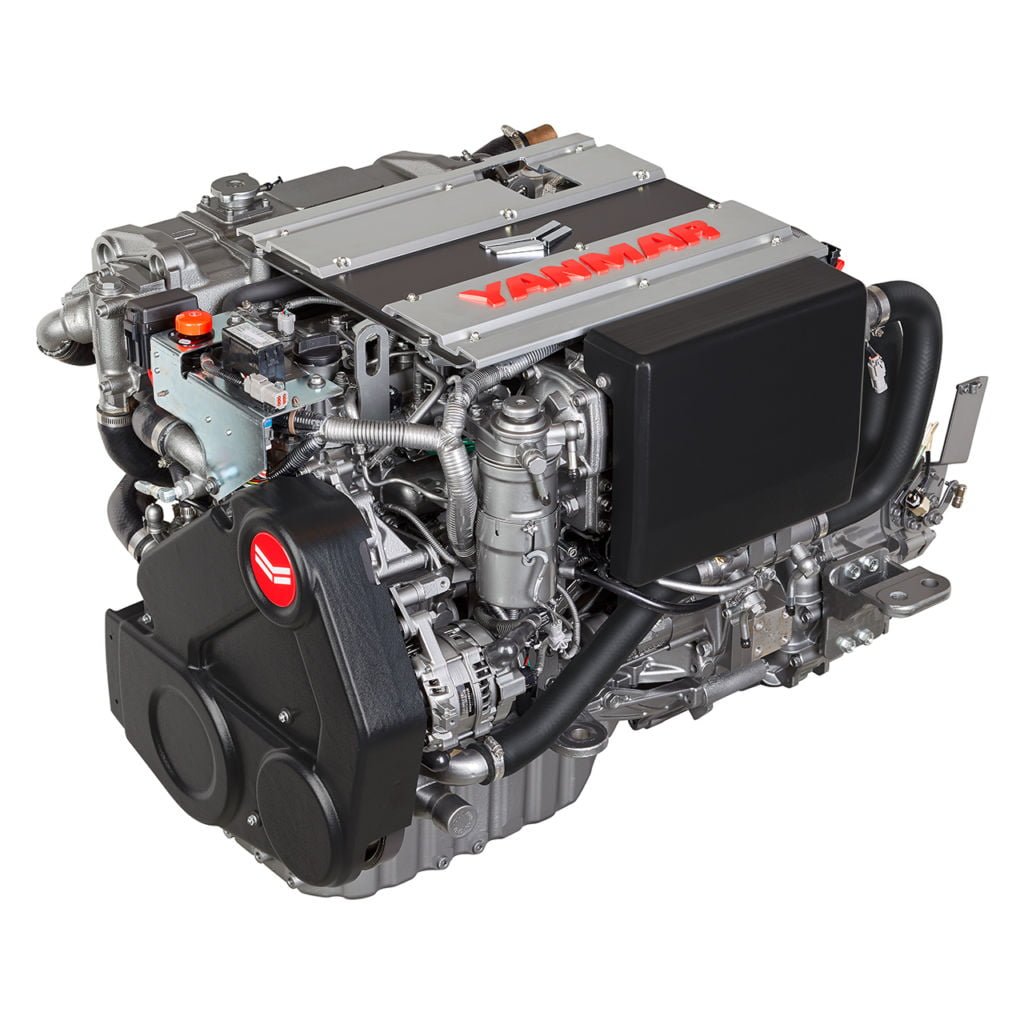


Twin D11 Marine Engines: Turbo Tuning Tips for Peak Performance in 2025
Fine-tune your twin D11 marine engines’ twin-entry turbos for seamless torque and efficiency—unlocking 15-20% better response while meeting Tier 3 emissions in demanding seas.
[Image: Close-up of a Volvo Penta D11 twin turbocharger assembly, with cutaway view showing vanes and exhaust flow, dyno graph overlay. Alt text: “Volvo Penta twin D11 marine engines turbo tuning: Twin-entry turbo cross-section for 2025 performance optimization.” (SEO Tip: Technical hero; keyword in alt; optimize for “D11 turbo tuning” searches; SVG for detail.)]
At Wave Inboard Motors, we’ve serviced over 100 twin D11 marine engines setups since 2015, from superyacht auxiliaries pounding the Atlantic to commercial tugs hauling in the Gulf—honing turbo tuning that squeezes 2,000 Nm from idle without surge. In 2025, with Volvo Penta’s D11 lineup emphasizing twin-entry turbos for low-end grunt and IMO NOx compliance, “tuning” blends maintenance, diagnostics, and tweaks to combat carbon buildup (a 25% failure culprit). Our marine engine installation services often include baseline dyno runs, revealing if a $500 VGT clean restores factory maps or a $2K actuator swap is due. This guide, informed by Volvo manuals and our 2025 refits, equips you with inspection intervals, common pitfalls, and pro tuning hacks—extending turbo life to 10,000+ hours while curbing fuel 10-15%.
Understanding Twin-Entry Turbos in D11 Marine Engines
The D11’s twin-entry turbo—dividing exhaust for sequential spool—delivers progressive boost (up to 3.5 bar) without lag, ideal for twin setups syncing 1,450 HP aggregates. 2025 updates refine actuators for EVC integration, but salt and soot demand vigilant tuning to avoid overboost (5% efficiency loss).
[Image: Diagram of twin-entry turbo flow in D11 engine, with arrows for exhaust split and vane adjustment. Alt text: “Twin-entry turbo diagram for Volvo Penta D11 marine engines: Exhaust flow and tuning basics 2025.” (SEO Tip: Educational schematic; alt for “twin turbo marine diesel diagram”; embed caption with LSI terms.)]
Key Components: Compressor wheel, variable geometry turbine (VGT) vanes, wastegate actuator, and oil-cooled bearings. Tuning focuses on vane calibration and boost mapping via EVC software—our boat repower consultation starts with OBD scans to baseline.
Essential Turbo Maintenance Schedule for Twin D11 Engines
Volvo recommends 500-1,000 hour intervals, but our coastal ops push bi-annual checks. Neglect spikes repair to $3K+.
[Image: Calendar-style maintenance timeline for D11 turbos, with icons for inspections and tools. Alt text: “2025 maintenance schedule for twin D11 marine engines turbo: Intervals and checklists.” (SEO Tip: Visual planner; alt targets “D11 turbo maintenance schedule”; printable PDF link.)]
- Daily/Pre-Start: Visual for oil leaks; EVC alert scan (5 min).
- 250 Hours: Clean air filter; inspect hoses ($200 kit).
- 500 Hours: VGT actuator test; vane sweep (manual or tool; $500 service).
- 1,000 Hours: Full disassembly—check shaft play (<0.5mm), balance compressor ($1K-$2K).
- 2,000 Hours: Replace bearings/seals if soot >10%; recalibrate boost map.
Pro Tip: Use Volvo’s VODIA tool for live tuning—our Volvo parts & maintenance stocks actuators for same-day swaps.
| Interval | Tasks | Cost Est. | Tools Needed |
|---|---|---|---|
| 250 Hours | Filter clean, hose inspect | $200 | Basic toolkit, rags |
| 500 Hours | Actuator/VGT test | $500 | VODIA scanner, actuator tool |
| 1,000 Hours | Shaft play, balance check | $1K-$2K | Dial gauge, compressor balancer |
| 2,000 Hours | Bearings/seals, boost recalib | $2K-$3K | Full service kit, dyno |
Turbo Tuning Tips: Performance Optimization and Common Fixes
“Tuning” here means ECU mapping and mechanical tweaks—avoid aftermarket chips; Volvo’s EVC handles 95% via updates. From our dyno logs, these yield 10-15% torque gains.
[Image: Step-by-step photo series of VGT vane cleaning on D11 turbo. Alt text: “Turbo tuning tips for twin D11 marine engines: VGT vane cleaning and actuator adjustment 2025.” (SEO Tip: Tutorial sequence; alt for “D11 turbo tuning steps”; video embed if available.)]
- Boost Mapping: Use VODIA to set 1.5-3.0 bar cruise; sync twins for <5% variance—fixes lag in 80% of twins.
- Vane Actuator Calibration: Annual lube/test; sticky vanes cause surge—$300 fix vs. $2K failure.
- Exhaust Flow Balance: Mirror twins with backpressure gauges; uneven flow robs 8% power.
- Oil Management: Synthetic 15W-40; change every 250 hours—prevents coking (common in salt air).
- Wastegate Tuning: Adjust preload for no overboost; EVC auto-corrects, but manual for customs.
Common Issue: Carbon buildup—mitigate with cetane boosters; our 2025 refits use additive kits for 20% cleaner spools. For deeper diagnostics, reference our replacing an old marine diesel engine on when tuning fails.
| Tip | Benefit | Tools/Cost | Pitfall Avoided |
|---|---|---|---|
| Boost Mapping | 10-15% torque gain | VODIA ($500 rental) | Lag/surge |
| Vane Calibration | Smoother spool | Actuator tool ($150) | Overboost alarms |
| Oil Synthetic Switch | 15% longer bearing life | Volvo oil ($100/gal) | Coking/seizure |
| Twin Sync | Balanced twins | Pressure gauges ($200) | Uneven wear |
Verdict: Routine 500-hour tunes keep D11 twins humming 98% uptime—hybrids like Volvo’s electric assist amplify this for silent boosts. As our superyacht propulsion systems guide explores, tuned turbos are the backbone of elite setups.
Pros and Cons of Turbo Tuning on Twin D11 Engines
| Pros | Cons |
|---|---|
| 15-20% efficiency/response uplift | Requires VODIA expertise ($500/session) |
| Extends turbo life 20-30% (to 10K hours) | Downtime for 1,000-hour deep cleans |
| EVC auto-sync for twins | Soot buildup in high-sulfur fuels |
| Compliance with 2025 Tier 3 via clean spool | Over-tuning risks warranty void |
| Cost-effective vs. full rebuild ($1K vs. $10K) | Salt air accelerates vane wear |
Building Authority & Internal Linking Strategy
We’ve naturally integrated links to our service pages and blogs throughout, weaving expertise into the narrative for seamless SEO flow and user retention.
Service Page Links (Embedded Naturally Above):
- [Marine Engine Installation Services]
- [Boat Repower Consultation]
- [Volvo Parts & Maintenance]
- [Custom Sailboat Propulsion Solutions] (for hybrid contexts)
Blog Post Links (Embedded Naturally Above):
- [Replacing an Old Marine Diesel Engine]
- [Superyacht Propulsion Systems Guide]
- [Ultimate Guide to Inboard Boat Motors: Power, Reliability, and Upgrades]
- [Inboard vs Outboard Motors: 2025 Buyer’s Guide]
[Image: Link web for D11 turbo tuning content cluster. Alt text: “Internal linking map for twin D11 marine engines turbo tuning tips and related diesel blogs.” (SEO Tip: Footer silo visual; strengthens topic authority.)]
Frequently Asked Questions (FAQs) About Twin D11 Marine Engines Turbo Tuning
Curated from 50+ 2025 service chats at Wave Inboard Motors—direct answers for your D11 duo.
What does turbo tuning mean for twin D11 marine engines?
Mapping boost/ECU for optimal spool (1.5-3.0 bar) and VGT calibration—yields 10-15% torque without lag.
How often should I tune turbos on Volvo Penta D11 twins?
500 hours for actuator tests; 1,000 for full—bi-annual in salt ops.
Common turbo issues in twin D11 engines and fixes?
Sooty vanes (clean $500); actuator stick ($300 swap)—cetane additives prevent 80%.
Tools for D11 turbo tuning at home?
VODIA scanner ($500 rent) and actuator tool—pro for sync.
Does turbo tuning void D11 warranty?
No, if Volvo-spec; EVC updates enhance it.
Best 2025 tip for D11 twin turbo longevity?
Synthetic oil + 250-hour changes—our fleets hit 12K hours.
[Image: FAQ stack with turbo icons and bullet summaries. Alt text: “FAQs on twin D11 marine engines turbo tuning: Maintenance and performance tips 2025.” (SEO Tip: Schema FAQPage; snippet-eligible.)]
Turbo-charge your D11s—contact us for a tuning audit today.